Your marble is beautiful, but unless it is sealed well, it will absorb colors and lose its lustre in no time. The majority of the DIY projects are left with streaks or uneven coverage since individuals forget vital procedures.
Here is the guide on sealing marble without destroying it. Your home will not suffer the breakages that cost homeowners hundreds of dollars.
Key Takeaways
- Test your marble first; not all marble needs sealing.
- Clean and dry completely before applying anything.
- Use thin coats, not thick ones.
- Know when to call professionals.
Test Before You Seal
Don’t just assume your marble needs sealing. Many homeowners waste money applying sealer to marble that doesn’t need it yet. The water test is your best friend here.
Drop some water on your marble surface. Watch what happens. If it darkens within 5 minutes, your marble is porous and needs sealing. If water beads up and sits there after 10 minutes, you’re still protected.
Your marble needs sealing when:
- Water stops beading on the surface
- Stains show up easier than before
- The shine is gone in high-traffic spots
- It’s been 6-12 months since the last sealing
- Oil or liquid soaks in quickly
Different marble types have different needs. Carrara is more porous than Calacatta and needs attention more often. Polished marble typically lasts longer between sealings than honed finishes because the polishing process closes some pores.
Location matters too. Kitchen counters take more abuse than a bathroom vanity. Floors in entryways need more frequent marble sealing in Melbourne than bedroom accent walls. Test every few months in high-use areas to stay ahead of damage.
Clean It Right
Cleaning the surface is the initial process in closing marble in the right way. Removal of dirt, soap, and any traces of particles should be done carefully. Blocking up the traps of these, permanently discoloured.
Use only pH-neutral cleaners. Do not use the acidic ones, such as vinegar or lemon juice. Wipe clean using a soft microfiber cloth and then rinse and rinse until all the cleaners are off, and then dry thoroughly.
The marble should be left to dry fully after 24 hours in order to avoid stagnant water that causes cloudiness and poor adhesion. Before sealing, check and verify that there are no scratches, no chips or stains, and seek small repairs; otherwise, consultation with a professional restoration service is necessary.
Pick the Right Sealer
Use the right marble sealer so that there is no form of damage or a fake coating. The two main types are:
- Penetrating sealers fill the pores in the marble, hence guarding the inside but not altering the look. They are non-deteriorating and leave the natural appearance and enable breathing, thus suitable in most houses, and avoid any stains.
- Topical sealers are a surface coating that is more resistant to stains but yellows, wears, and needs to be reapplied often. It is optimal in busy business premises.
Countertops should be sprayed with waterproofing that can withstand the effects of spills that include acidic content (wine or coffee). Resistance to foot traffic and cleaning products is the main issue on the floors, hence a floor-specific sealer should be selected.
Select solvent-based sealers in order to obtain maximum protection, and use water-based based in order to get the least odor. Marble sealers that have a better quality cost more to start with; however, they are more durable, and they also perform better.
How to Apply Seal For Marble
Work in small sections, about 3-4 square feet at a time.
Simple steps:
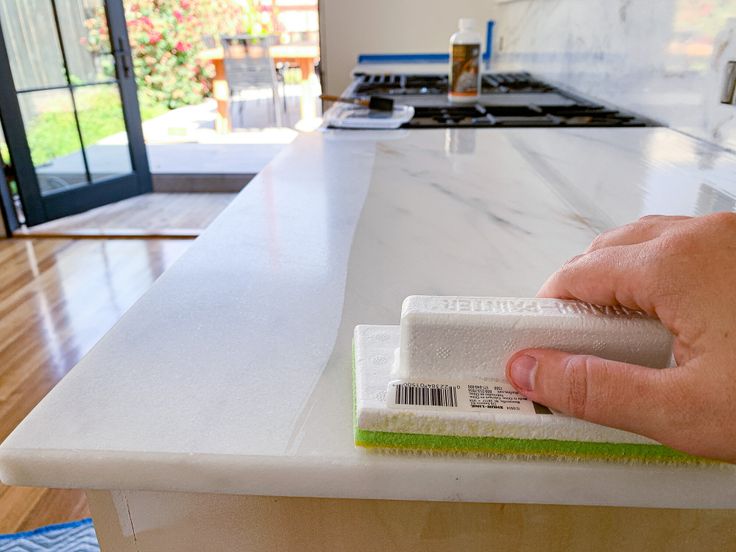
- Apply a thin coat with a lint-free cloth
- Spread evenly along the veining
- Let it sit 5-15 minutes (check your product)
- Buff away excess with a dry cloth immediately
- Wait 2-4 hours, then apply a second coat
Don’t pour too much. More isn’t better. Excess creates streaks and sticky residue.
Most marble needs two coats. Dense marble might only need one. Highly porous types might need three.
Temperature affects drying.
Don’t Make These Mistakes
Common errors that ruin everything:
- Using acidic cleaners before sealing
- Sealing too soon after installation (wait 48 hours)
- Not testing a small spot first
- Applying thick coats instead of thin ones
Streaks happen when you don’t buff fast enough. Work in sections you can manage.
Over-sealing makes marble look plastic. If it feels sticky or too shiny, you went overboard. This needs stripping; call marble sealing services in Melbourne for this.
Keep It Protected
After sealing, don’t use the surface for 24-48 hours. Let it cure properly.
Daily care:
- Wipe spills immediately
- Use coasters and cutting boards
- Clean with pH-neutral products only
- Dust mop floors daily
Reseal kitchen counters every 6-12 months. Bathrooms last 12-18 months. Low-traffic areas can go 2-3 years.
Do the water test every few months. When water stops beading, reseal.
When to Call Pros
Perfectly huge spaces, scarcity of marble, or correcting errors. All these require professionals. They possess commercial-grade products and know how to make them work the first time around.
Conclusion
Sealing marble is not difficult with the proper steps taken. Wash, dry, lube with thin layers, and clean. With proper care, your marble will last for decades. It is better to skip the shortcuts and not spend money on fixing them in the future.
When you are renovating or inheriting the neglected marble, the professionals can examine, repair, and seal it at the same time. Usually less expensive than several home projects.
FAQs
-
How do I seal marble without streaks?
Apply in thin coats and buff immediately before the coating dries. Work in small circular motions using a lint-free cloth in sections.
-
What is the best way to test if marble needs sealing?
Drop water on the surface. If it darkens within 5 minutes, seal it. If it beads after 10 minutes, you’re good.
-
Can I seal marble before grouting?
Yes, always seal before grouting. This is to prevent grout stains from absorbing into the edges of marble.
-
How long does marble sealer last?
Kitchen countertops: Reseal every 6-12 months. Bathrooms: 12-18 months. Low-traffic areas: 2-3 years. Test regularly instead of guessing.
-
What mistakes should to avoid when sealing marble?
Never seal wet or dirty marble. Avoid thick coats or the use of acidic cleaners beforehand. Always test on a small, inconspicuous area and wait 48 hours after installation.